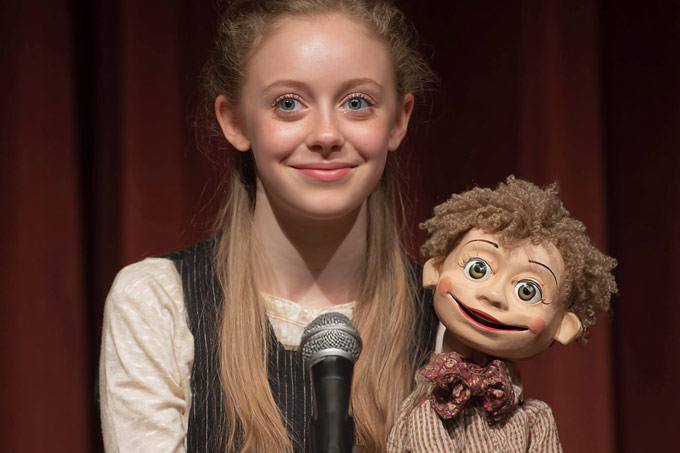
When most beginners start learning ventriloquism, they focus on one thing: Technique. How to keep their lips still. How to say difficult sounds. How to make the voice sound different.
Those are all important skills – but they’re only part of the picture. Because ventriloquism isn’t just about how you speak. It’s about how you perform.
Technique Alone Isn’t Enough
You can learn to speak without moving your lips. You can master sound substitutions. You can make your voice clear and controlled. And still… your performance might not feel convincing.
Why? Because the audience isn’t just watching your technique. They’re watching the experience you create. If your character feels flat, if the interaction feels forced, or if the timing feels off, the illusion weakens – even if your technique is strong.

The Goal Is Believability
The purpose of ventriloquism is not to impress people with technical skill. It’s to make them believe your character is real. That belief doesn’t come from perfect lip control alone. It comes from a character with personality, natural interaction between you and the character, reactions that feel genuine, and timing that mirrors real conversation.
When these elements are present, even imperfect technique can feel convincing. Without them, even perfect technique can feel empty.
Character Brings Everything to Life
Technique gives your character a voice. Performance gives your character a personality. Is your character funny? Curious? Sarcastic? Confident? Awkward? These traits shape how the character speaks, reacts, and interacts.
Without personality, the figure becomes just an object that talks. With personality, it becomes someone the audience can engage with.

Interaction Is the Heart of Ventriloquism
Ventriloquism is not a monologue. It’s a conversation. The back-and-forth between you and your character is where the entertainment happens. That means interruptions feel natural, reactions happen in real time, and the character has its own “voice” and opinions.
This interaction creates energy and keeps the audience engaged. It also strengthens the illusion that two separate personalities are present.
Timing Makes It Feel Real
Think about how real conversations work. People don’t speak in perfectly spaced, mechanical patterns. They pause. They react. They interrupt. They respond. Ventriloquism should feel the same way.
Good timing allows dialogue to feel natural, jokes to land more effectively, and moments to build before they resolve. If everything is rushed, the performance feels artificial. If you allow space, it starts to feel real.

Your Focus Guides the Audience
Where you look matters. How you react matters. What you pay attention to matters. If you look at your character while it speaks, the audience will follow your focus. If your character moves naturally, attention shifts toward it.
This is how the illusion is strengthened. You’re not just speaking – you’re guiding the audience’s perception.
Imperfection Can Still Work
One of the most encouraging things for beginners is this: You don’t need perfect technique to be effective. If your character is engaging, your timing is natural, and your performance feels real, small technical imperfections often go unnoticed.
In fact, audiences are more forgiving than you might expect. They’re focused on the experience – not analyzing your lip movement.

Performance Is What People Remember
After a ventriloquism performance, most people don’t walk away thinking about how well you controlled your lips. They remember: the character, the personality, the funny or memorable moments, and the interaction between you and your figure. That’s what stays with them. And all of that comes from performance.
Technique is important. It gives you the tools you need to create the illusion. But performance is what brings those tools to life. It turns a skill into an experience. It turns a figure into a character. It turns a demonstration into something people enjoy and remember.
So as you continue learning ventriloquism, keep practicing your technique. But don’t stop there. Because the real goal isn’t just to speak without moving your lips. It’s to perform in a way that makes your character feel real.


Leave a Reply